In the current era of AI-integrated search, the way travelers find information has changed. They no longer just browse links; they ask complex questions like, "Which hotels in your portfolio are pet-friendly and near the transit hub?" To ensure your brand provides the answer, your content must be easily discoverable by Web Crawlers—the automated scouts used by Google and Large Language Models (LLMs) like Gemini and ChatGPT. At Bonafide, we’ve optimized our delivery to ensure your knowledge base isn't just live, but active and indexed.
Download Technical Deployment Instructions
1. The Map to Your Content: Sitemaps
Think of your website as a massive global resort. A Sitemap is the detailed travel itinerary we provide to search engines to ensure no "hidden gem" of information is missed.
-
What it is: A digital file (XML) that lists every important URL on your site.
-
Why it matters: While bots can find content by clicking links (like a guest walking from the lobby to the pool), deep-level content—like specific FAQ sections or promotional landing pages—can sometimes be "unlinked" from your main navigation to keep your UI clean.
-
The Bonafide Advantage: We provide the direct "map" to these pages so AI scouts find every room, amenity, and policy instantly, regardless of where they sit in your site's hierarchy.
2. The Library Card Catalog: Indexing
Once a crawler finds your page, it needs to Index it. This is the process of filing your data into a searchable "Card Catalog" used by AI to generate real-time answers.
If a traveler asks an AI assistant about your check-in policies, the AI doesn't visit your website in that second; it looks at the Index it built previously. Our goal is to make sure your latest updates are indexed immediately so the AI never gives out-of-date information.
3. Scaling for Global Brands
For our partners managing massive portfolios (like major airlines or global hotel chains), a single map isn't enough. We utilize:
-
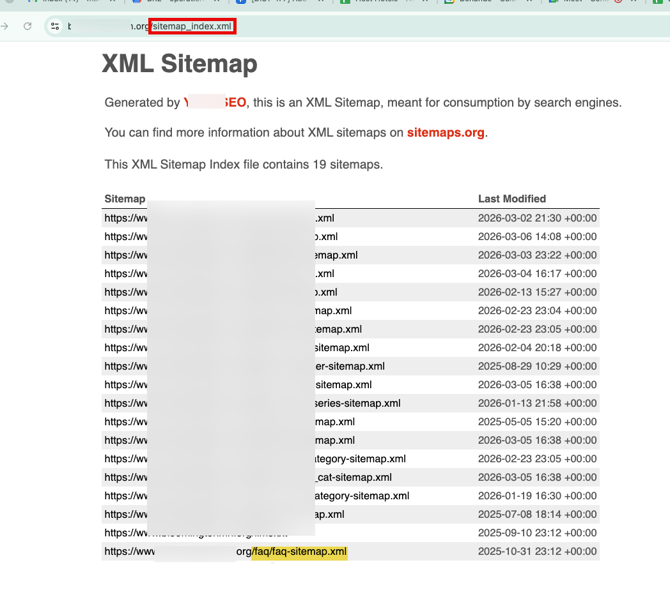
Sitemap Indexes: A "Master Directory" that organizes thousands of URLs into manageable regional or category-based guidebooks.
-
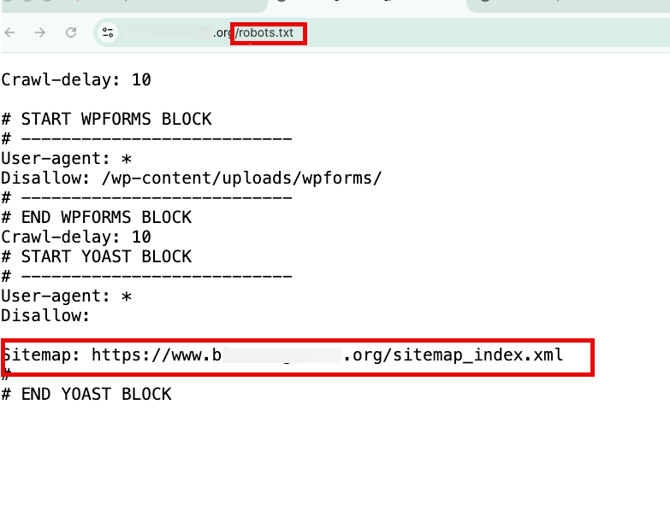
Robots.txt: Think of this as the "Front Desk Agent." It tells AI bots exactly which areas are open for scouting and where to find the Master Itinerary (the Sitemap link), ensuring they spend their time on your most valuable content.
4. Behind the Scenes: Formats for the Future
We don't just deliver text; we deliver "machine-readable" intelligence. We provide your content in three layers:
-
HTML: For your human guests to read.
-
Markdown (.MD): A simplified format that LLMs "ingest" much faster than traditional webpages.
-
Structured Data (JSON-LD): Hidden "tags" inside the code that tell AI exactly what is a "Question" and what is an "Answer," ensuring your data is used as a primary training set for travel models.
5. Implementation Checklist: A Guide for Your Technical Team
We aim for a "zero-friction" deployment. To ensure the content we’ve built for you is fully visible to the AI world, please share this checklist with your web or IT team:
Phase 1: Deployment
-
[ ] Extract the Package: Extract the
faq.tar.gz(or provided archive) into your chosen top-level directory (e.g.,yourbrand.com/faq). -
[ ] Verify URL Live Status: Confirm that individual pages (e.g.,
yourbrand.com/faq/policy-update.html) are loading correctly in a browser.
Phase 2: Discovery (The "AI Signal")
-
[ ] Update Robots.txt: Add a directive pointing to the new sitemap.
-
Example:
Sitemap: https://yourbrand.com/faq/sitemap.xml
-
-
[ ] Cross-Link Sitemaps: If you use a Sitemap Index, ensure our new FAQ sitemap is added to your master index file.
-
[ ] CMS Sync: If using WordPress (Yoast) or Drupal, ensure the
/faqdirectory is "whitelisted" so the CMS doesn't accidentally block it.
Phase 3: Search Console (Optional but Recommended)
-
[ ] Google/Bing Verification: Drop the small verification file we provide into the root folder. This allows us to "force-crawl" the new content so it appears in AI searches within hours, not weeks.
RECOMMENDED OUTPUT
YourDomain/robots.txt
YourDomain.com/sitempa_index.xml